Launch in Toconao
Presentation of the first Planisferio Astrodiálogos Lickan Antay.
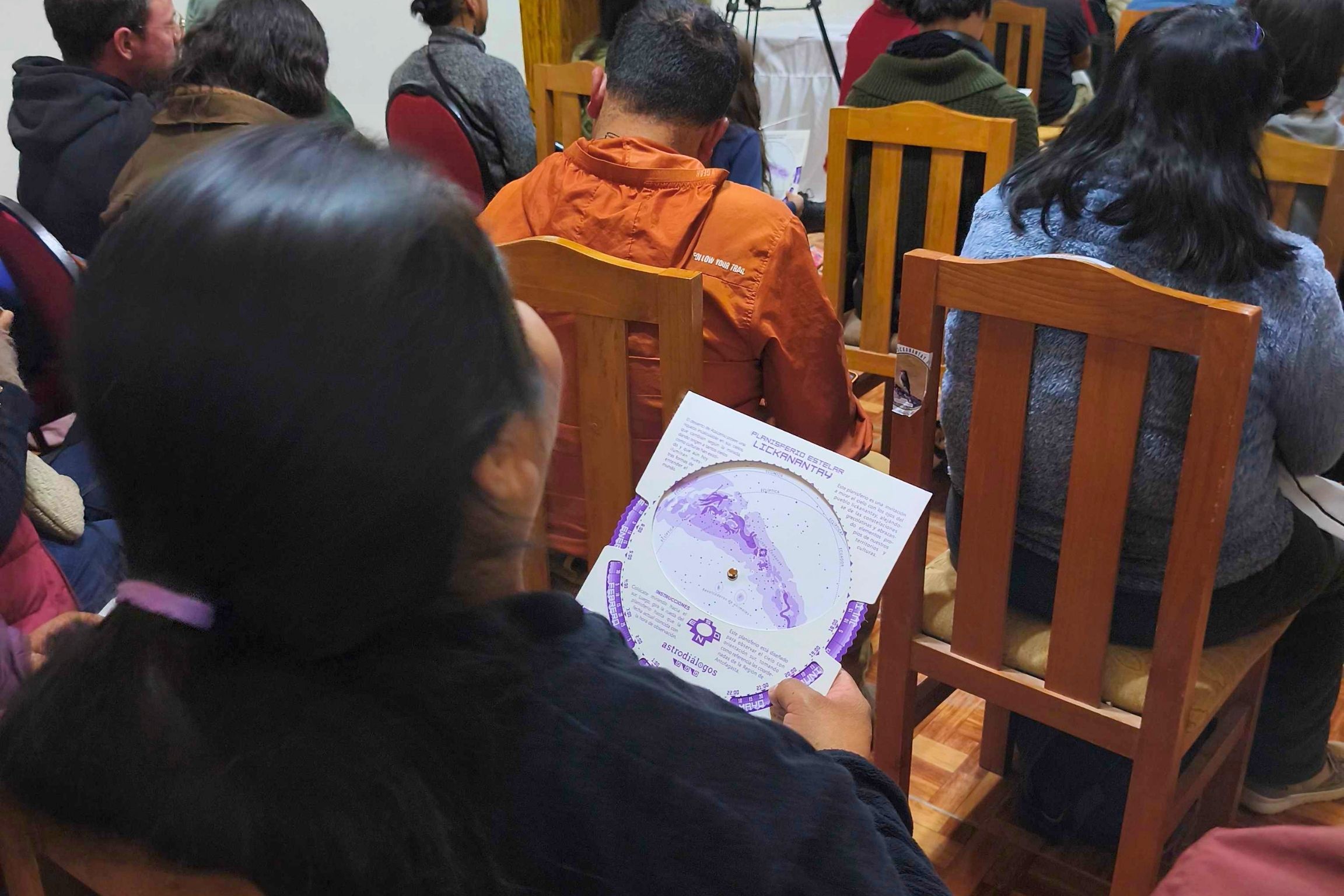
Fundación Astrodiálogos, together with Aira Lay Lay, Estación Ckamur and Lickan Antay collaborators from the Atacameño territory, presented in Toconao the first Planisferio Astrodiálogos Lickan Antay: an educational and cultural tool that invites people to recognise the sky from a situated perspective within the territory, integrating astronomy, memory, heritage and intercultural dialogue.
The launch took place on Saturday 13 June 2026 at the Club Deportivo de Toconao, next to the village square, in an open session that brought together community members, students, teachers, researchers and representatives of initiatives linked to astronomy and local heritage.
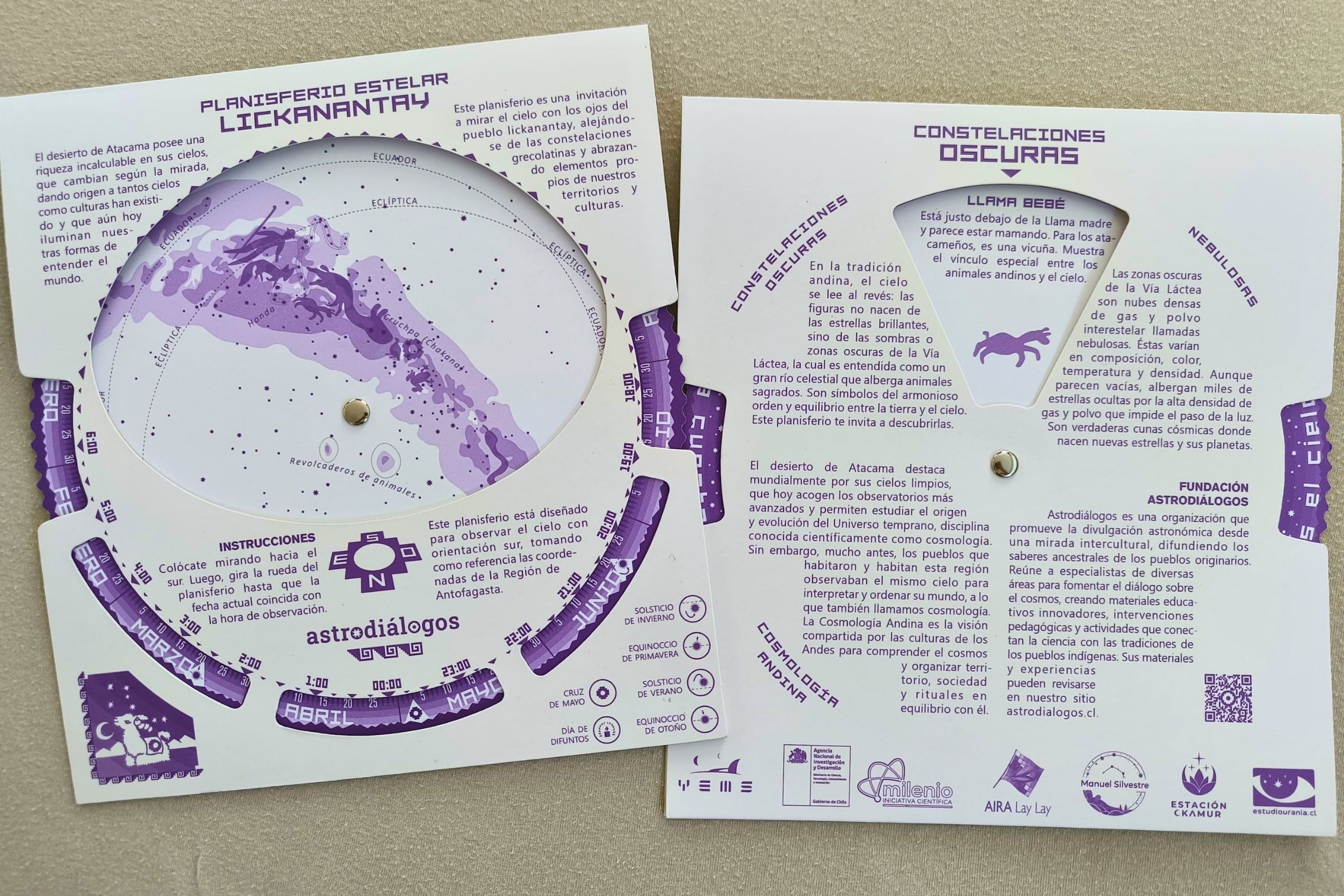
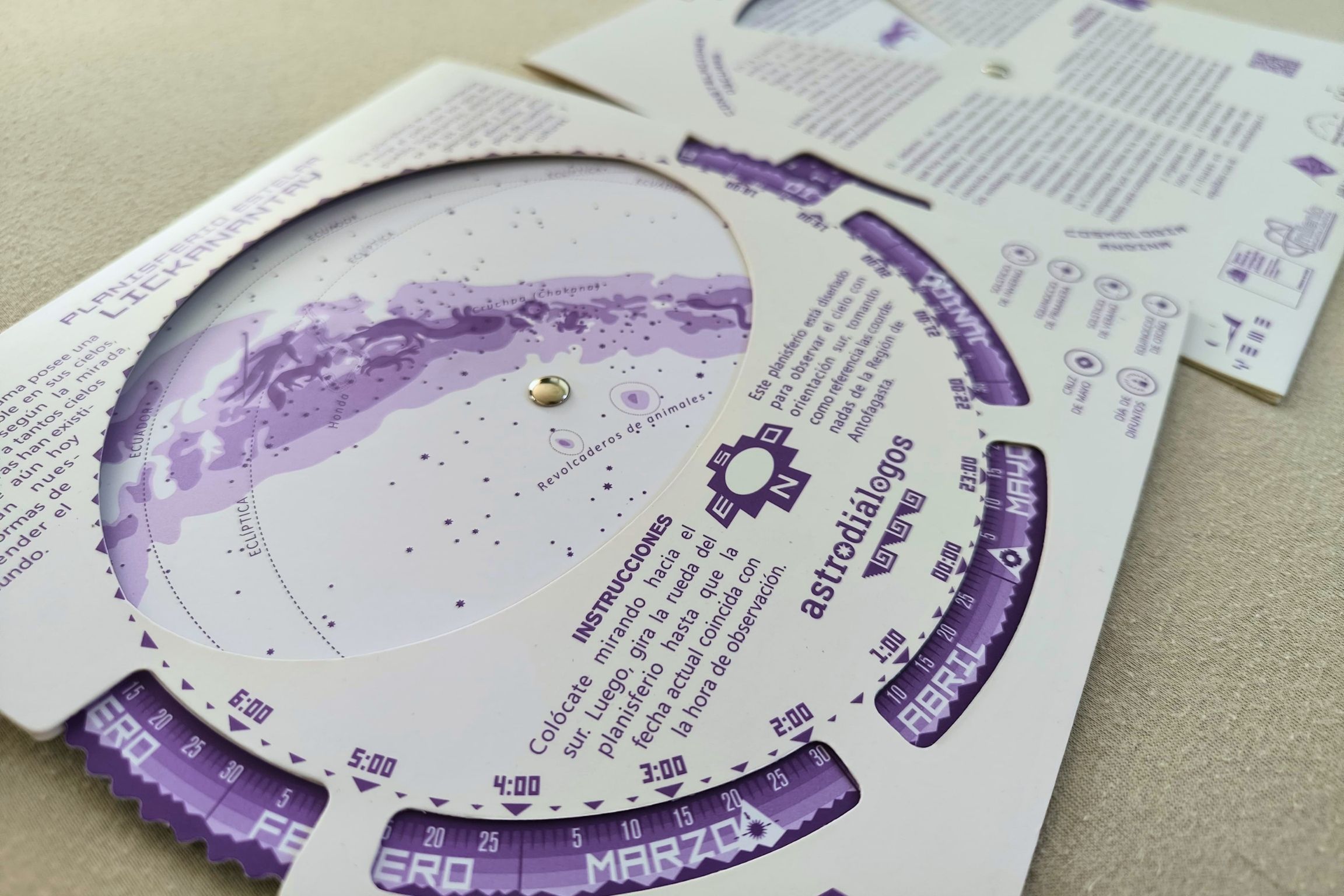
A planisphere is a tool that allows people to identify constellations, stars and other objects visible on a specific date and time. Using a rotating disc system, it reproduces the changing appearance of the sky throughout the year and helps with orientation during night-time observation. The Planisferio Astrodiálogos Lickan Antay takes this classic concept and adapts it to the Atacameño territory, incorporating dark constellation views and cultural and educational references that invite people to understand the sky not only as an object of scientific study, but also as part of the memory, landscape and identity of those who inhabit it.
The session began with the Ckunza Universo immersive virtual reality experience, designed to introduce the dialogue between scientific astronomy and Lickan Antay knowledge. This was followed by the talk "Astronomical Views from the Atacama", given by Dr James Miley, astronomer and researcher at the ALMA Observatory and Millennium Nucleus YEMS. The Estación Ckamur project was then presented, addressing its role in the territory and its link with astronomy and Atacameño heritage.
The activity continued with the presentation of the star map, explaining what it is, what it represents, how it was developed and how it can be used to identify elements of the night sky. As a finale, participants received observation kits and moved to an astronomical observation point, where they used the planisphere in practice to orient themselves and identify the Toconao sky.
The Planisferio Astrodiálogos Lickan Antay is the result of several years of collaborative work between Fundación Astrodiálogos, educators, cultural practitioners, community representatives and Lickan Antay collaborators from the Atacameño territory. Its development is part of a broader line of work aimed at creating spaces for encounter between contemporary astronomy, education, heritage and local knowledge about the sky.
The star map was born from a collaboration built with respect and dialogue, recognising that the sky is also part of the territory, memory and education. In this process, Fundación Astrodiálogos has sought to accompany and coordinate the development of the material, always recognising the central role of the Lickan Antay communities and individuals who give the project its cultural and territorial meaning.
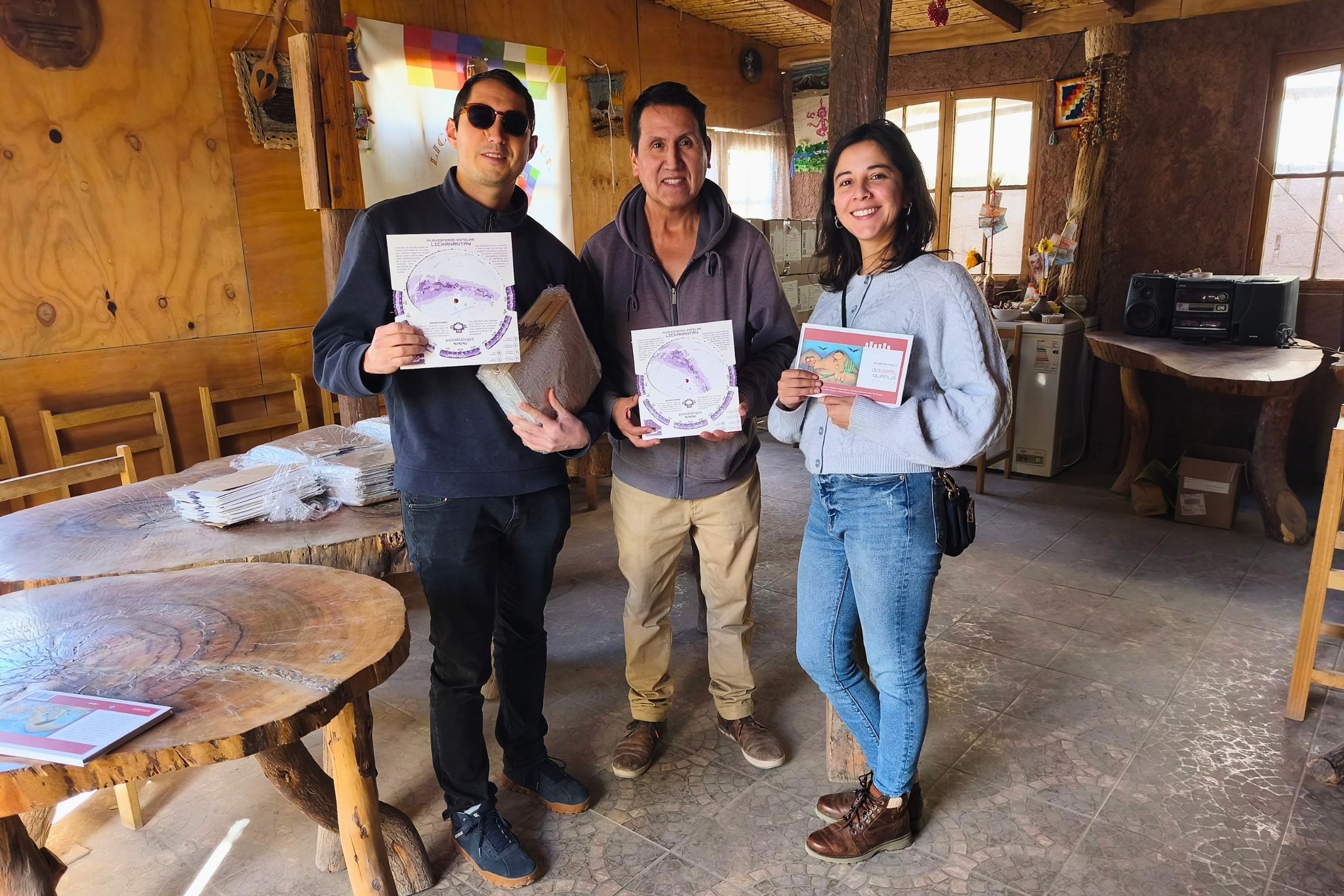
At Fundación Astrodiálogos, the development of the star map was coordinated by Gabriel Ruete, anthropologist and co-founder of the foundation, and Sebastián Pérez, astronomer, co-founder of the foundation, deputy director of Millennium Nucleus YEMS and associate professor at the Physics Department of Universidad de Santiago de Chile. Graphic design was by Camilo Núñez Díaz.
The development of this first star map was made possible thanks to the collaborative work of Fundación Astrodiálogos, under the umbrella of Millennium Nucleus YEMS, together with Aira Lay Lay, Estación Ckamur and Lickan Antay collaborators. The project involved Manuel Silvestre, environmental educator and tourism guide from Toconao; Blanca Mundaca, director of the Estación Ckamur project; and Esteban Araya Toroco, from Aira Lay Lay and a Lickan Antay cosmovision practitioner.
For Millennium Nucleus YEMS, this activity represents an opportunity to strengthen the relationship between frontier astronomical research, science education and local communities. In a country where some of the world's most important observatories are located in indigenous and rural territories, initiatives like this allow the conversation about astronomy to be broadened, incorporating territorial, cultural and educational perspectives.
The launch of the Planisferio Astrodiálogos Lickan Antay is part of a collaborative effort to create materials that allow the sky to be viewed from Chile not only as a natural laboratory for science, but also as a space for memory, belonging and encounter.
The Planisferio Astrodiálogos Lickan Antay was developed as an educational and cultural tool in collaboration with local actors in the territory. Fundación Astrodiálogos supports the development of the material but does not carry out commercial sale or distribution. Within the Lickan Antay territory, distribution of the star map is the right and responsibility of the participating local actors: Aira Lay Lay, Estación Ckamur, and Manuel Silvestre. Astrodiálogos uses the star map only in educational activities and on a non-profit basis. For people or institutions outside the Lickan Antay territory, we are still developing the best way to access the material.
Source: Communications, Millennium Nucleus YEMS and Fundación Astrodialogos.
Photo gallery
Presentation of the first Planisferio Astrodiálogos Lickan Antay.
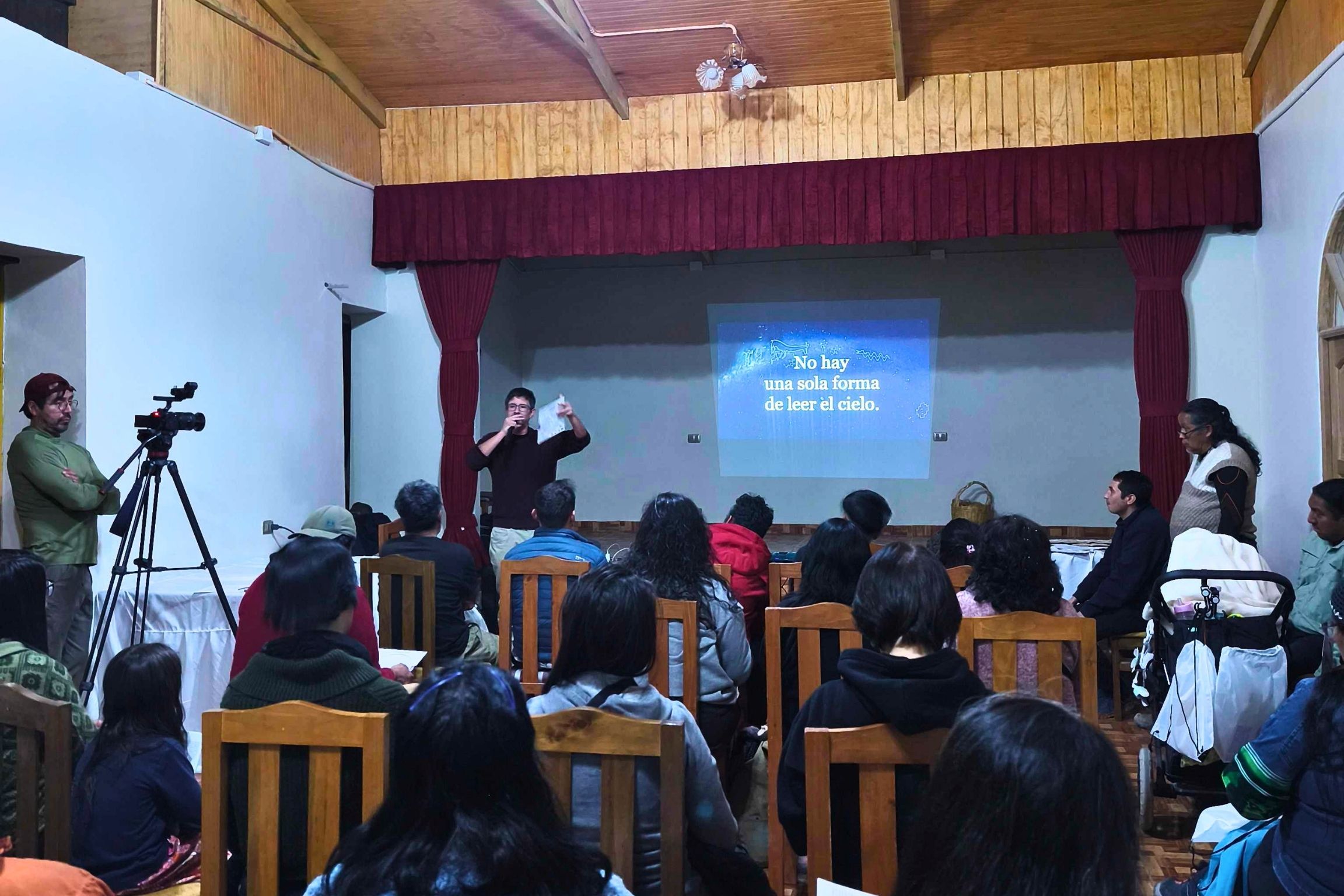
A community event around astronomy, memory and heritage.
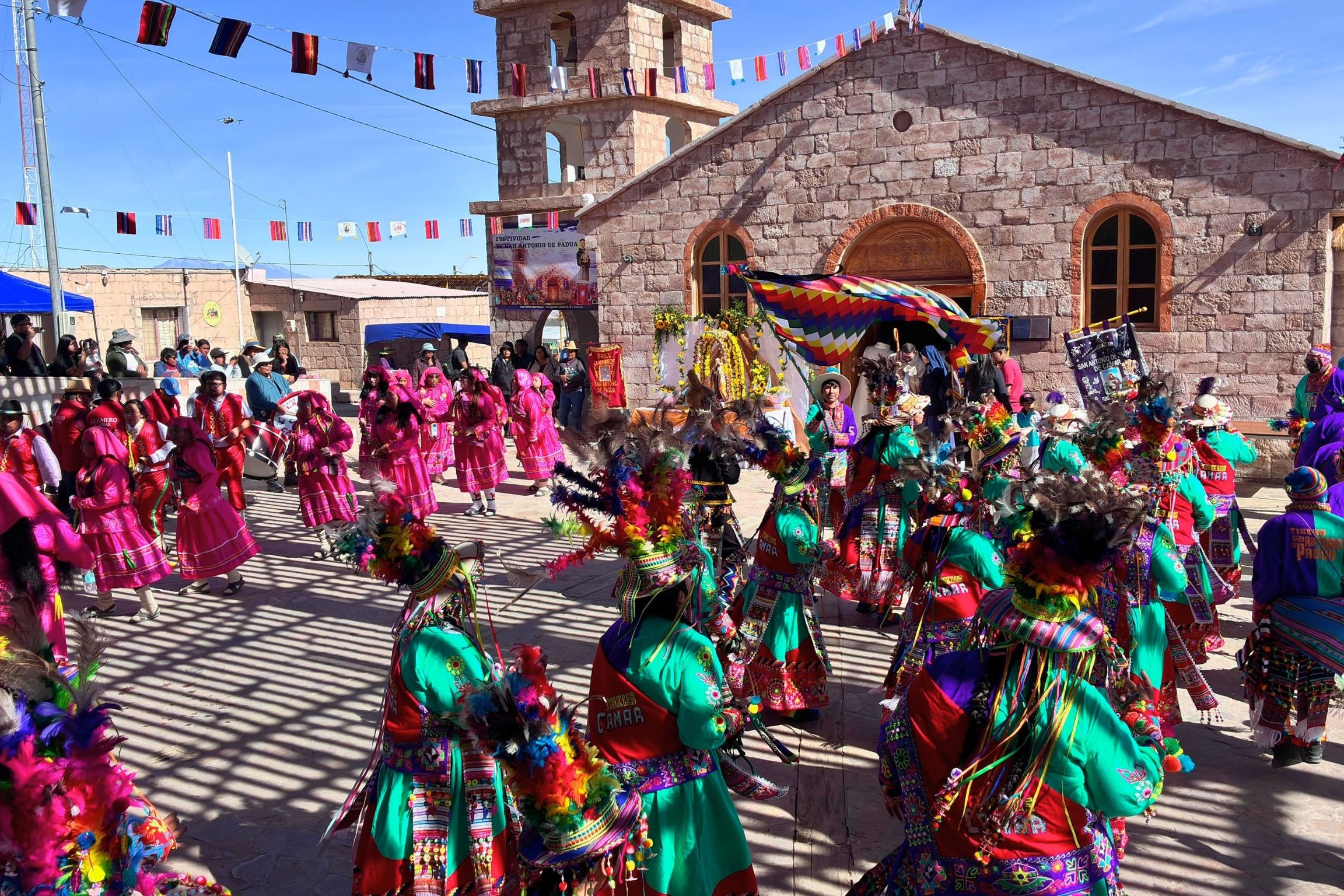
The star map was developed through a collaboration based on respect and dialogue.
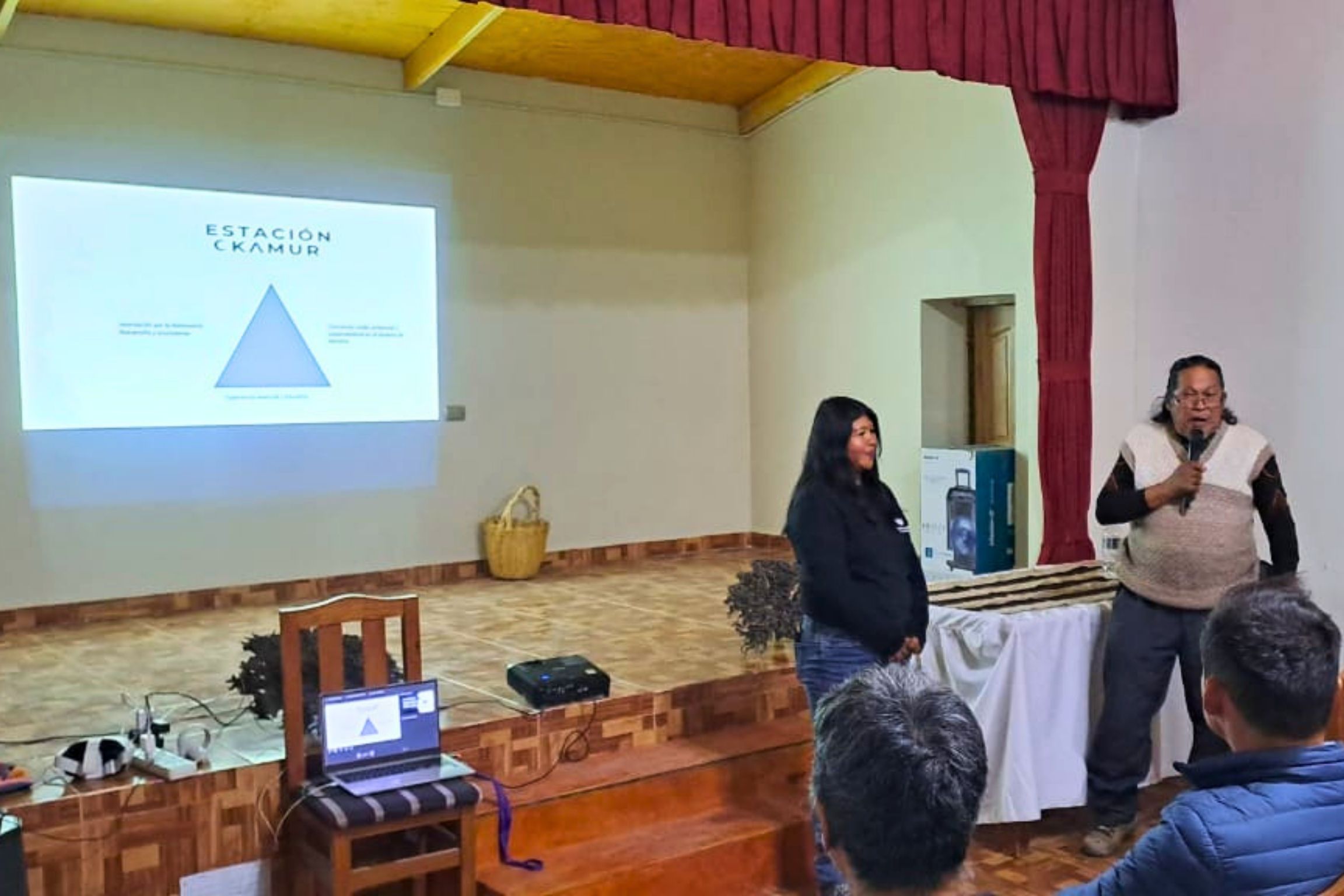
With Blanca Mundaca, director of the project.
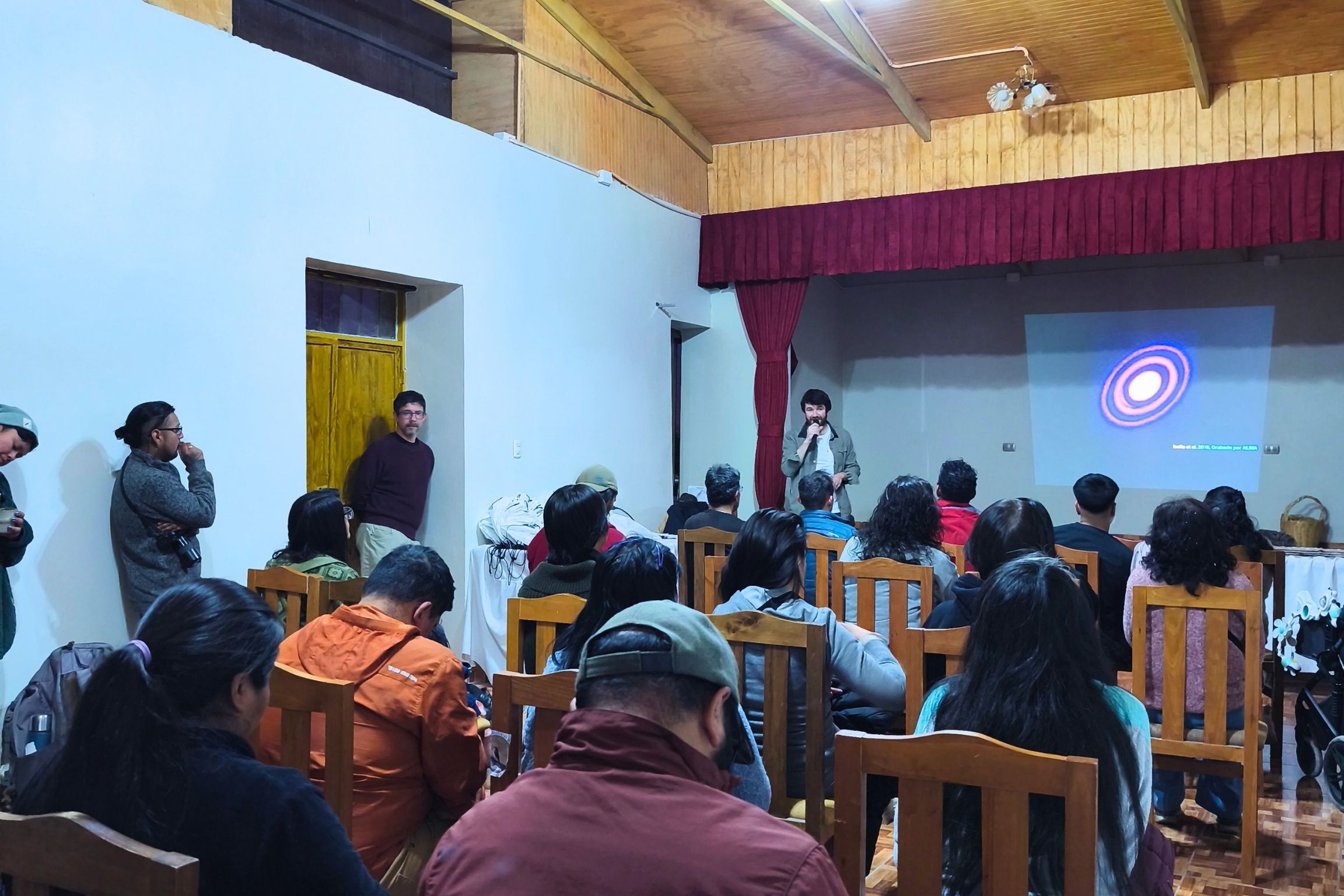
Dr James Miley talking about the origin of planets.