An innovative paper by researchers at the USACH Physics Department, led by Dr Carla Hernández, was published this October in the prestigious journal The Physics Teacher and selected as a Scilight by the American Institute of Physics (AIP Publishing). This recognition is awarded only to research considered to have high impact and international relevance in the physical sciences.
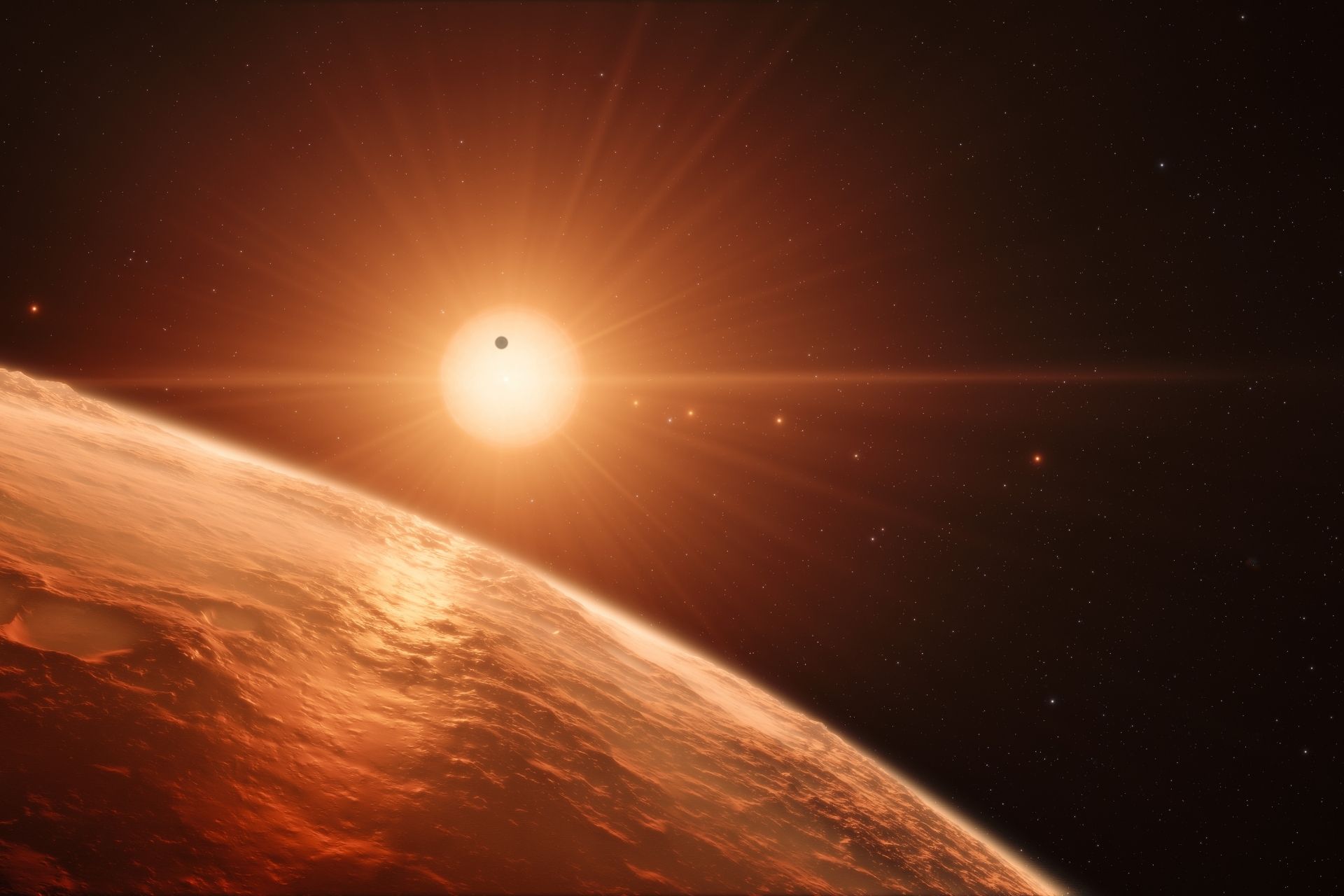
The article, titled "Analysis of New Planetary Systems in School: Applications of Newton's Universal Law of Gravitation and Kepler's Third Law", presents a teaching sequence designed and implemented in Chile that uses real exoplanet data to teach contemporary astrophysics concepts in school classrooms.
Scilights are summaries written by professional science communicators that highlight the most interesting research published in AIP journals. Their aim is to give global visibility to findings and bring them to a broader scientific audience.
"It is always satisfying to publish in an international journal, but being highlighted as a Scilight was a pleasant surprise. This recognition validates years of collaboration with science teachers and demonstrates the effectiveness of the collaborative model and the quality of the teaching sequences co-designed and implemented in Chilean schools," said Dr Carla Hernández.
For his part, Professor Rubén Montesinos, lead author of the study, highlighted the importance of making scientific advances accessible to educational communities: "One of the main challenges was the lack of pedagogically appropriate resources for teaching the physics behind exoplanet discoveries. Although data are available in open catalogues, their complexity makes them practically inaccessible to teachers and students. This work seeks to overcome that barrier."
The team, which carries out its work within the Millennium Nucleus on Young Exoplanets and their Moons (YEMS), hopes that this recognition will drive new collaborations between the university and schools, and that the collaborative model will be replicated by other research centres. "Our goal is to promote the use of frontier science in classrooms as a powerful tool to promote learning among students, always in horizontal collaboration with teachers who are the true specialists in the classroom," concluded Dr Hernández.
Access to the article and the Scilight
- Author preprint: Montecinos et al. (2025)
- Published paper in The Physics Teacher: https://doi.org/10.1119/5.0192450
- Scilight (AIP Publishing): https://doi.org/10.1063/10.0038982